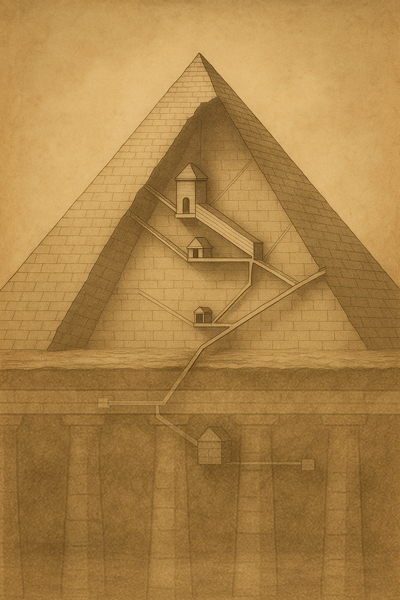
 A lot of thought went into this.Structure — Giving Shape to Ideas
Once Discovery has clarified what the website must accomplish, the next step is to give those insights a defined, navigable structure. Structure is where scattered inputs become an organized system — a framework that will support design, content, and development.
This is the architectural phase of the project.
It answers the question:
“How should everything fit together?”
Good structure is invisible when done well.
Bad structure is impossible to ignore.
From Inputs to Architecture
Structure is where we translate goals, content, and constraints into a logical arrangement of pages, templates, and user paths.
We determine:
-
Which pages the site needs
-
How those pages should be grouped
-
What should appear in the navigation
-
How users should move through the content
-
What templates are required to maintain consistency
-
What information belongs on each page
This ensures that the website grows from a rational framework, not from guesswork.
Making the Site Understandable
A well-structured website:
-
Reduces cognitive load
-
Improves search visibility
-
Makes content easier to maintain
-
Helps visitors find what they came for
-
Enhances clarity before design ever begins
Structure provides the outline that the rest of the project depends on.
It is the bridge between understanding (Discovery) and expression (Design).
Outputs of the Structure Phase
By the end of this stage, we produce:
1. A Page Map
A hierarchical list of all required pages and how they relate to each other.
2. A Navigation Plan
Primary menu, secondary menu, footer links — all arranged logically and thoughtfully.
3. Template Definitions
A list of page types the site will use, such as:
-
Home
-
Service pages
-
Product listings
-
Galleries
-
Article pages
-
Contact forms
Each template has a purpose and a consistent structure.
4. Content Placement Decisions
Where each piece of information belongs — and where it does not belong.
5. Flow Diagrams (Optional)
Visual maps of user paths and decision points.
These outputs collectively form the blueprint the Design and Build stages will rely on.
Why Structure Matters
Structure prevents the confusion and inefficiency that often plague sites built “page by page.”
It gives shape to the project before any visual decisions are made, ensuring:
-
The design phase is faster and more accurate
-
The build phase is smoother and more predictable
-
Content has a clear home
-
The site remains stable and maintainable over time
Structure is where the website becomes logical.
What Comes Next
With the architecture in place, we move into Design, where meaning and clarity become visual.
 Peridox Web Services